
Trace Former Neosho County Owners by Era
The Register of Deeds reports holdings reaching back to the 1800s, including early federal Patent Deeds. No official source pins down a complete earliest online year for Neosho County deed records. Older former owners often still require a visit to the office plus archival bridges.
| Trail source | Known reach | Keeper | Use in the chain |
|---|---|---|---|
| Recorded instruments | 1800s to present | Register of Deeds | Grantor, grantee, date, legal description |
| Patent deeds | Early federal grants | Register of Deeds and federal sources | Possible start of private title |
| Recorded plats | Varies by addition | Register of Deeds | Lot, block, dedication, replat |
| 1906 atlas | 1906 snapshot | Kansas Memory | Township plats and landholder leads |
Whatever era you are chasing, begin with the newest deed for the parcel. That habit builds a defensible path back through each owner of record. It also reveals when a historical source is only a clue rather than proof. See the recorder's official description of its holdings.
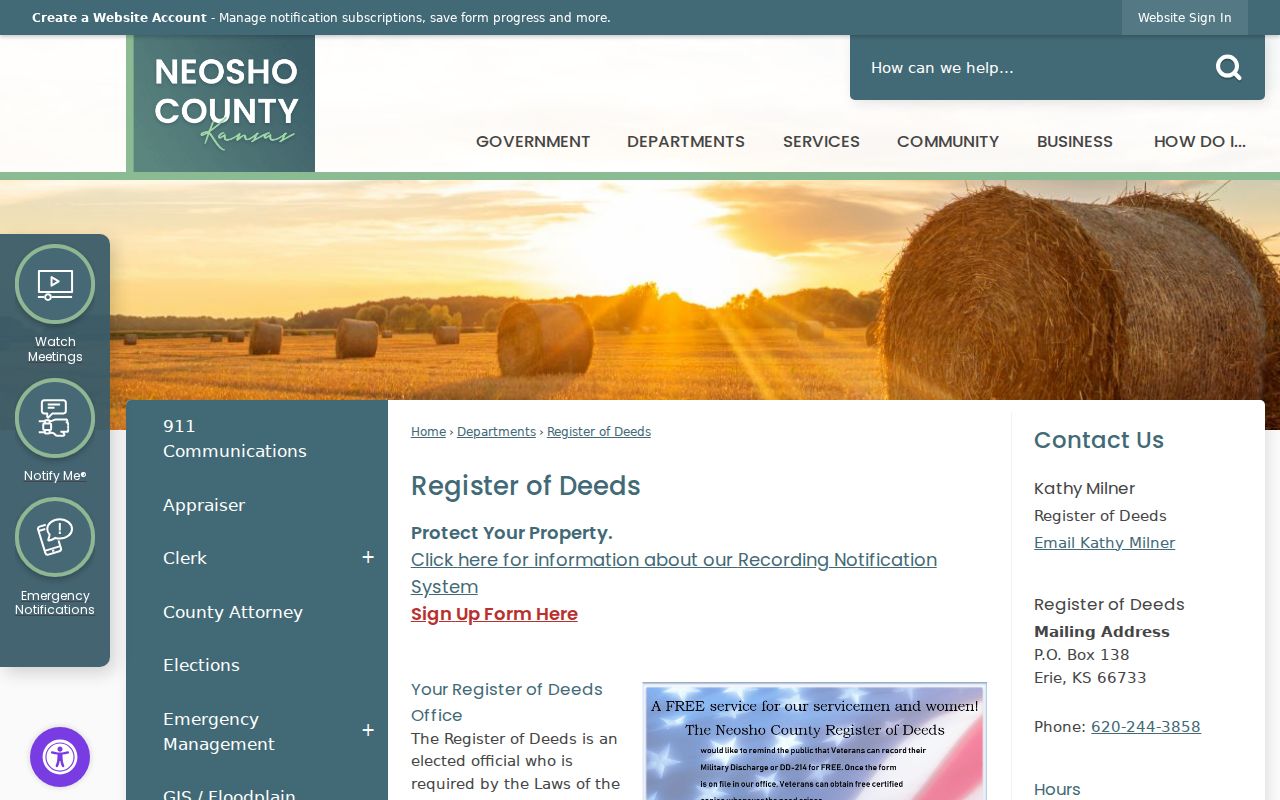
The office page lays out public inspection rights, the recorded-document categories it keeps, and the access route for requesting each type of Neosho County record.
The 1868 Record Loss Can Break an Early Chain
The Erie and Osage Mission county-seat conflict left a lasting scar. Clerk records and tax rolls were carried away from Erie. They were never recovered. Because of that loss, a missing early entry is not proof of anything. It does not mean no transfer happened in Neosho County. Research before 1874 should lean on other sources. Patents, court and probate files, newspapers, atlases, and state archives can fill the gap. Treat this as a documentary gap, never as permission to guess a former owner.
Search Former Owners Under Old Place Names
Old place names open side doors in a Neosho County property search. New Chicago leads to Chanute records. Osage Mission, by contrast, leads to St. Paul. Rose Hill and Prairie Du Chien are historical terms tied to Galesburg and Thayer. Check the KSHS post-office index for dates, then return to the deeds and legal descriptions.
Reconstruct the Neosho County Deed Chain Backward
Every transfer must concern the same tract. For each deed, capture the instrument type, execution and recording dates, book/page or instrument number, grantor, grantee, legal description, consideration context, and the prior reference.
- Find the current conveyance, with the present owner as grantee.
- Read the grantor, land description, and cited prior instrument.
- Search that grantor as an earlier grantee, testing initials, married names, trusts, and estates.
- Repeat through deed books; flag every changed acreage, replat, split, or missing reference.
- Grantor
- The party conveying an interest.
- Grantee
- The party receiving it.
- Chain of title
- The ordered series of instruments tied to the same land.
- Legal description
- The tract wording that persists better than an address.
Follow More Than Warranty Deeds
Warranty deeds tell only part of the story. Previous owners may surface through quitclaim or correction deeds, survivorship affidavits, beneficiary transfers, executor or trustee deeds, court orders, replats, and estate instruments. Search mortgages with their releases, liens, easements, oil and gas records, and powers of attorney whenever they touch the Neosho County chain of title.
Use the 1906 Neosho County Atlas as a Name Bridge
The Kansas Memory 1906 atlas pairs township and larger-town plats with landholder names. It can suggest a prior owner of record from an era before modern parcel numbers existed in Neosho County.
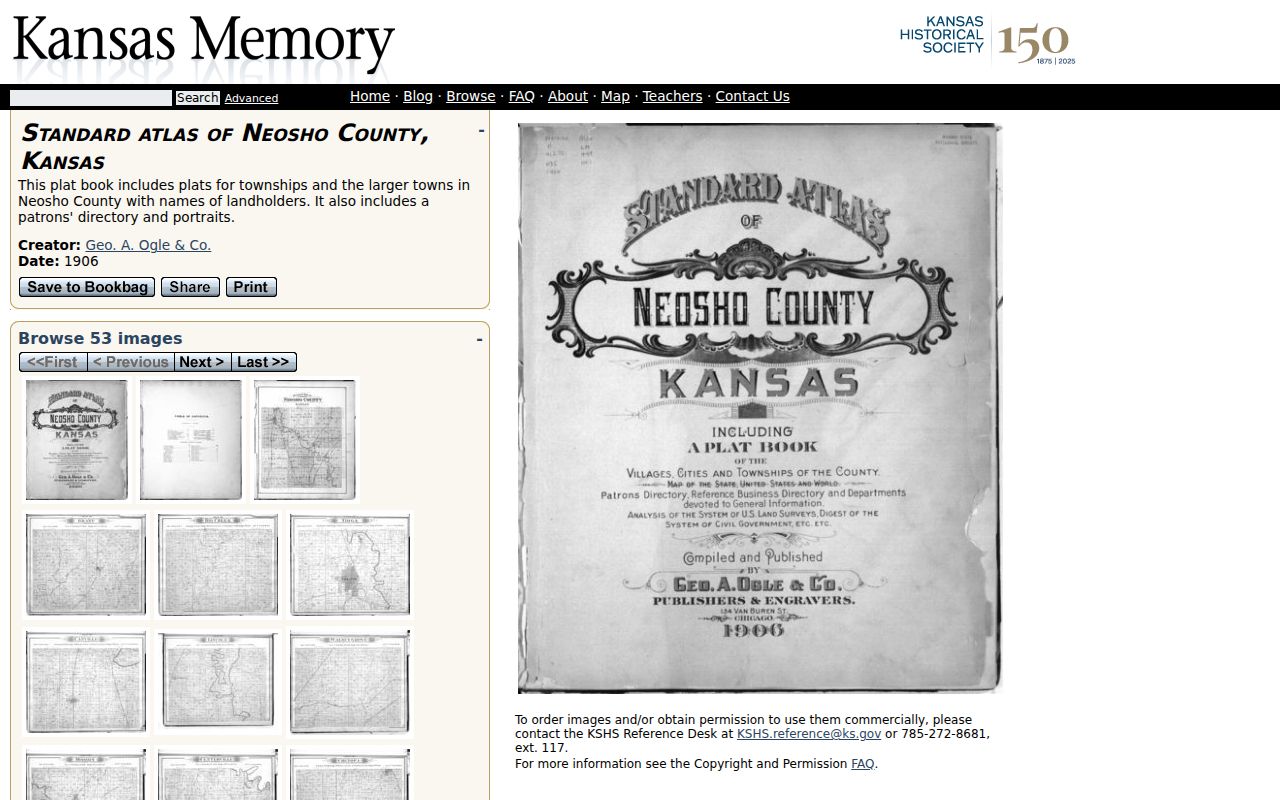
Atlas scale and old boundaries limit exact matching. Corroborate any name through the recorder, patents, probate files, or newspapers before trusting it.
Continue a Former-Owner Search at the Erie Office
The Erie office welcomes public inspection Monday through Friday, 8:00 a.m. to 4:30 p.m. Reach Kathy Milner at 620-244-3858 or registerofdeeds@neoshocountyks.org, or write P.O. Box 138, Erie, KS 66733. Ask about copy or certification fees and identify each instrument precisely. Probate or title litigation may still be unresolved. For those matters, the 31st Judicial District offers Erie and Chanute courthouse routes. The courthouse terminal may display public material that is not online.
Flag Every Break in the Former-Owner Timeline
A chain break wears several faces in Neosho County deed records. A prior deed reference may be unfindable. Acreage may change. A parcel gets split or combined. A legal description shifts without a located replat. An estate signer appears, or a mortgage release never shows up. Keep each problem flagged beside the instrument where it begins.
A street address is weak evidence for an old tract. Addresses get renumbered, and postal names drift over time. The subdivision, block, lot, Section, Township, Range, and metes-and-bounds descriptions preserve the land connection. They carry it through every owner change. Metes and bounds fixes a tract by measured courses and boundary calls.
Track Additions, Replats, and Lot Changes
Recorded plats often explain a puzzle. A former owner's deed may describe the land differently from the current parcel card. Neosho County examples include Erie Original, St Paul Original, Catholic Mission, Mission Estates, Lakewood Heights, Southtown, and Safari Industrial Park. It also covers several numbered or supplemental additions.
Treat CIC subdivision wording as a candidate search value only. Ask the recorder for the actual plat. Then capture its addition name, lot, block, replat or supplement, recording details, dedications, easements, and restrictions. Never normalize a spelling before testing the exact index form.
Order the Instrument, Not a Generic History
Precision saves time at the counter. Supply the owner name variant and document type. Include the approximate date, legal description, and any instrument or book/page reference. Public inspection and a certified copy are different services. The county fee schedule lists $13 for certification. Page and document fees vary, so check them before ordering any Neosho County record.
The office itself will not run a complete title search or draft legal documents. A careful researcher can still assemble a sourced timeline of previous owners from the deed records. The timeline comes straight from the deed records themselves. For a transaction or legal conclusion, an attorney or title company must evaluate the chain.
Build a former-owner timeline one transfer at a time. Give every deed its own row. Give every unresolved question its own note. Record the execution date and the recording date separately, since each answers a different question. Copy grantor and grantee names exactly as indexed. Keep initials, former names, trust wording, estate roles, and company suffixes intact. Before moving to an older deed, carry forward the legal description. Carry any reference to a prior instrument too.
Stop when the description changes. Explain the reason. A split, a combination, a correction, a replat, a road dedication, an easement, or an acreage change can all mean the same thing. The modern parcel no longer matches the older tract. Search the recorded plat and its linked instruments instead of forcing a street address across the break. For institutional or rural land, test corporation records and powers of attorney. Test oil and gas instruments and mortgage or lien releases too.
Historical sources should bridge a gap. They should not replace the chain itself. Preserve the newspaper title, publication date, page, and archive query. Preserve the atlas item, probate case, obituary index, or patent reference you relied on. Then return to the Register of Deeds or the court record for the legal connection. This discipline matters most before 1874. Missing clerk records and tax rolls from the county-seat conflict can leave a genuine hole in Neosho County.
Let the timeline end where the evidence ends. The county says its records reach the 1800s and include early federal Patent Deeds. It publishes no earliest online index year. A careful report can name prior owners, cite instruments, and flag missing links. It cannot promise a complete online chain or declare title clear. Transaction decisions call for a title company, an attorney, and official copies suited to the question.
Save copies or citations as the chain grows. A name list without source dates and instrument references cannot be checked later.
Know Where Neosho County's Former-Owner Chain Stops
The recorder's 1800s statement and the Patent Deeds point to a long trail. They do not prove uninterrupted online coverage. Stop where the documentary link breaks. Label the missing instrument. Historical names and atlas entries are leads, not certified title evidence.
Lawful use. Trace Neosho County former owners for house history, estate work, or property diligence. Never use records to track, harass, or harm a living person.
A professional title examiner should resolve the chain before any transaction. Research notes can identify links and gaps. They do not certify marketable title.